MSCAN
Explainable Lumbar Spinal Stenosis Diagnosis
CVPR'25 Demo
Arnesh Batra*
Arush Gumber
Anushk Kumar
Indraprastha Institute of Information Technology, Delhi
* Represents Equal Contribution
Abstract
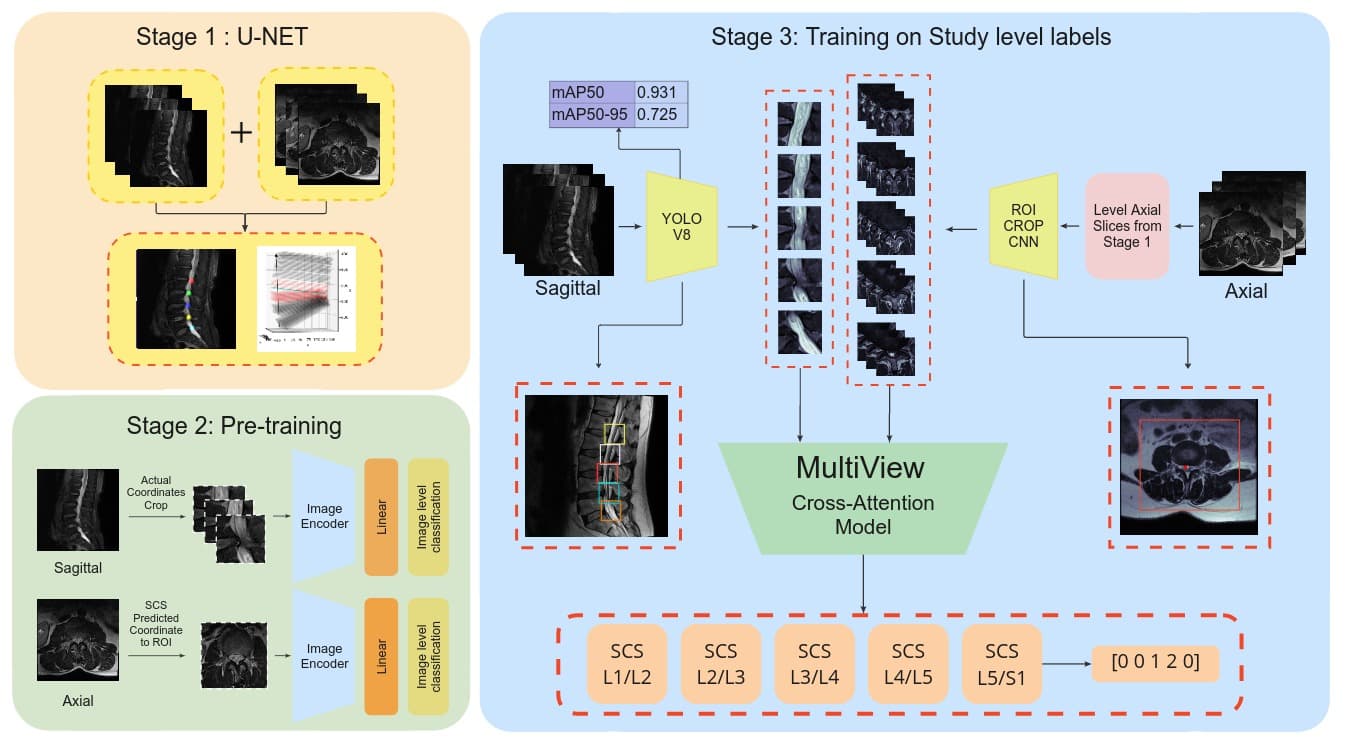
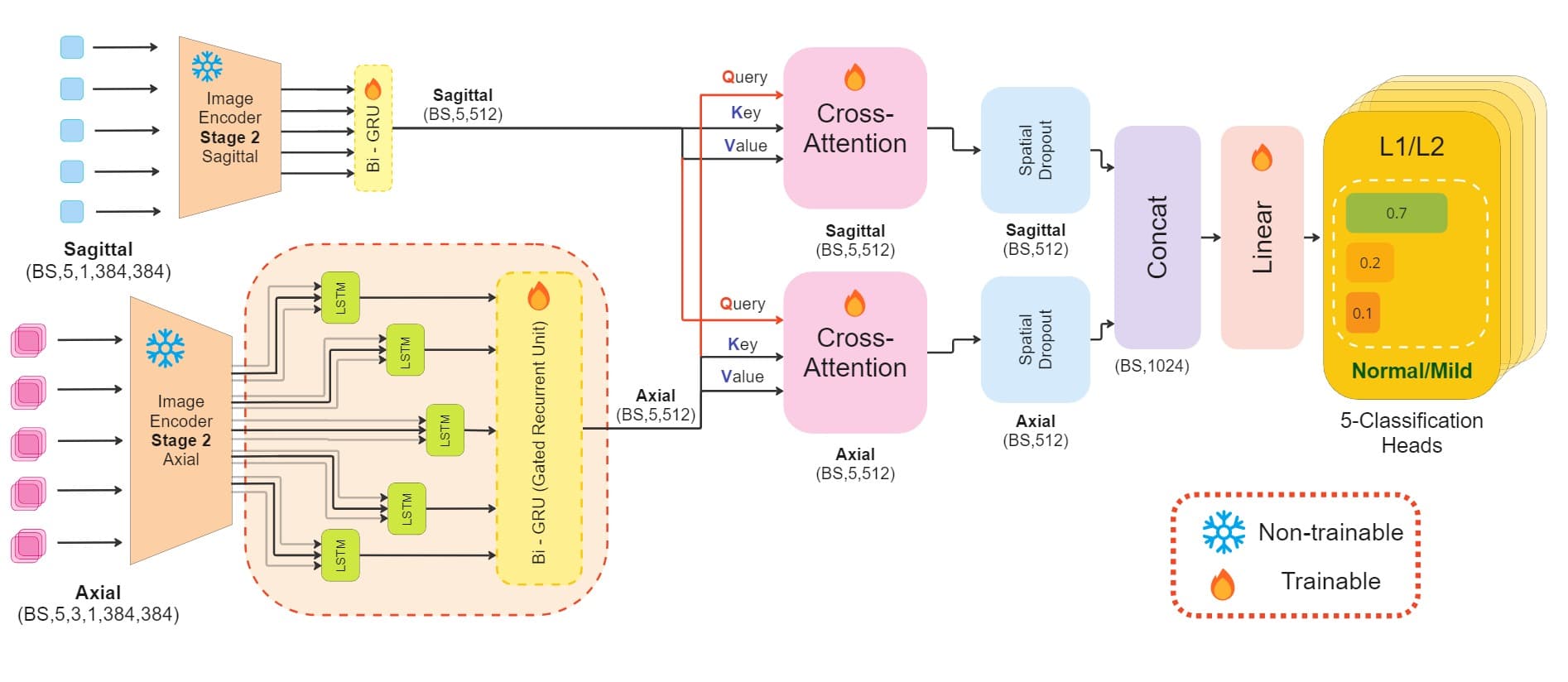
The increasing prevalence of lumbar spinal canal stenosis has resulted in a surge of MRI imaging, leading to labor-intensive interpretation and significant inter-reader variability, even among expert radiologists. This paper introduces a novel and efficient deep-learning framework that fully automates the grading of lumbar spinal canal stenosis. We demonstrate state-of-the-art performance in grading spinal canal stenosis on a dataset of 1,975 unique studies, each containing three distinct types of 3D cross-sectional spine images: Axial T2, Sagittal T1, and Sagittal T2/STIR. Using a distinctive training strategy, our proposed multistage approach effectively integrates Sagittal and Axial images. This strategy employs a multi-view model with a sequence-based architecture, optimizing feature extraction and cross-view alignment to achieve superior predictive accuracy in spinal canal stenosis grading.